This is the question we get more than any other, and the honest answer is that it depends entirely on your situation. Sometimes a cash offer is the right move. Sometimes it plainly isn't, and we'll tell you so.
We're a cash buyer, so you'd be right to read this with some skepticism. Here's our position up front: we only want to buy your house if it's genuinely the better option for you. A deal that leaves someone feeling taken advantage of isn't worth doing. So this is the same breakdown we'd walk you through sitting at your kitchen table.
Want to see these numbers for your own house? Try our free home sale calculator. It walks your sale price down line by line, repairs, commission, the months of carrying, so you see what listing really leaves you and where a cash sale honestly fits. No email, no offer.
The core trade-off
Listing on the open market typically produces a higher sale price. A cash sale typically produces more certainty, more speed, and fewer costs along the way. Almost every decision comes down to which of those you need more.
The mistake people make is comparing the wrong numbers. They compare a listing price to a cash offer. What they should compare is net proceeds and time, what actually lands in your account, and when.
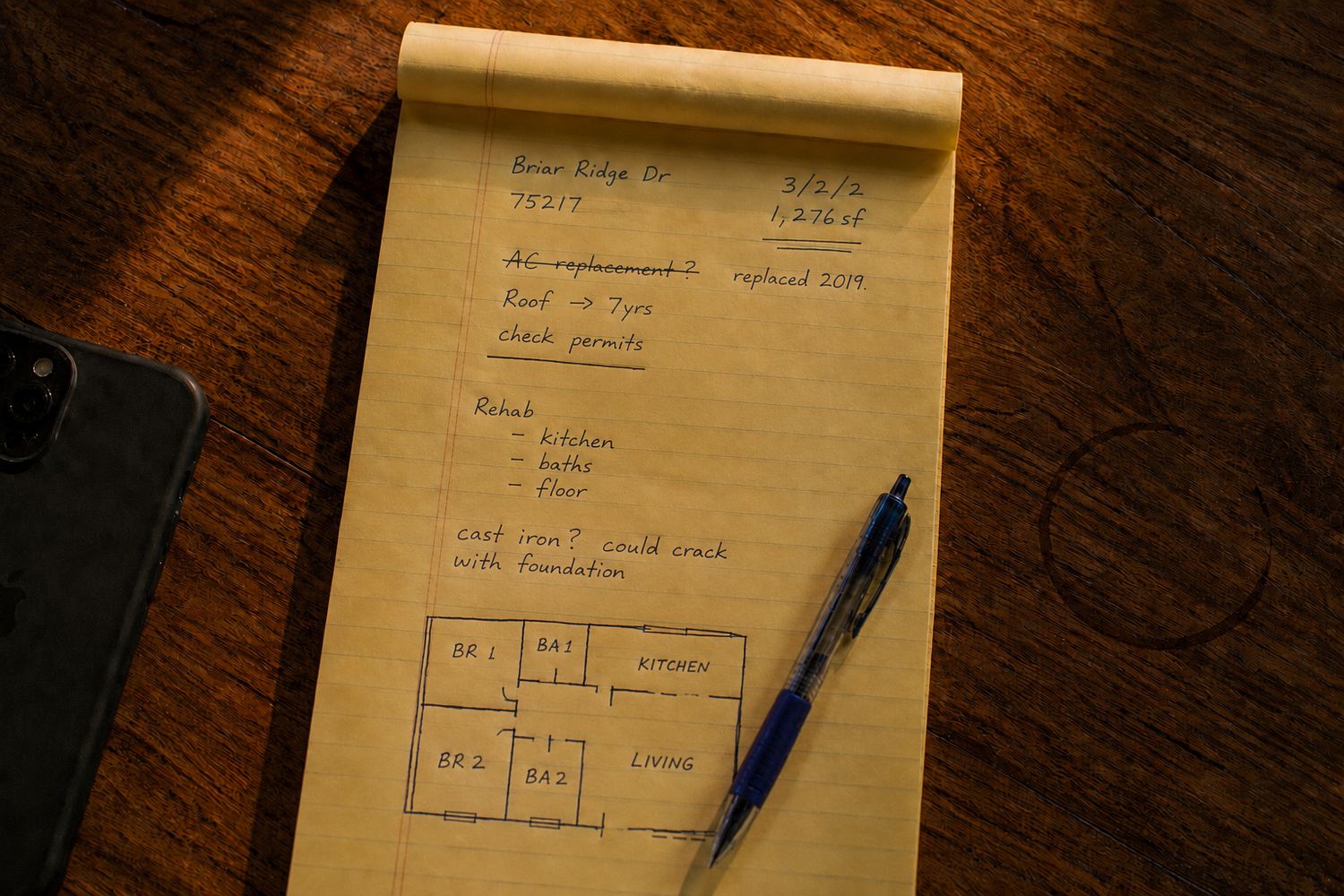
What listing actually costs
| Cost | Typical range in DFW |
|---|---|
| Agent commissions | 5–6% of sale price |
| Seller-paid closing costs | 1–3% of sale price |
| Pre-listing repairs & updates | Varies widely, often $5,000–$40,000+ |
| Buyer repair requests after inspection | Frequently $2,000–$10,000 |
| Holding costs while listed | Mortgage, taxes, insurance, utilities |
That last line matters more than people expect. Homes in the DFW metro have been averaging roughly 48 to 60 days on market in 2026, and that's just to get under contract. Add 30 to 45 more days for a financed buyer to close. On a $2,000-a-month carrying cost, three to four months of holding is $6,000 to $8,000 before you account for anything else.
A rough way to think about it: between commissions, closing costs, repairs, and holding, a traditional sale commonly consumes 8–12% of the sale price. On a $350,000 home, that's $28,000 to $42,000 off the top.
When listing is clearly the better choice
We'd rather say this plainly than have you find out later:
- Your house is in good shape. If it's updated, clean, and would show well, the open market will almost certainly pay more than we can. Retail buyers pay retail prices.
- You have time and no pressure. If you can comfortably carry the house for three to six months and you're not under any deadline, time is on your side.
- You're comfortable with the process. Showings, open houses, inspections, negotiation, and the possibility of a deal falling through don't stress you out.
- Your top priority is the highest possible number. That's a completely reasonable goal. It just isn't what a cash sale optimizes for.
If your house doesn't need much work, we're usually not your best option. We'll say so at the appointment rather than waste your time.
When a cash offer tends to make more sense
- The house needs significant work. Foundation issues, roof damage, dated systems. Retail buyers either walk away or demand steep concessions, and lenders may not finance the purchase at all.
- You need a specific closing date. A job transfer, a closing on another property, a court deadline.
- You're settling an estate. Often with siblings in different states and a house full of belongings nobody wants to sort.
- You're behind on payments. Timeline certainty matters more than the last few thousand dollars.
- You're done being a landlord. Especially with tenants still in place.
- You simply don't want the process. No showings, no strangers walking through, no repairs, no two-month wait to find out whether the buyer's financing held.
The thing nobody puts in the comparison chart
A listing price is a hope. A cash offer is a commitment.
Financed deals fall through, appraisals come in low, underwriting finds something, buyers change their minds. When that happens at day 45, you don't just lose the buyer. You go back on market with a stale listing, and buyers assume something is wrong with the house.
That risk has a real value, and it rarely shows up in a side-by-side comparison.
How to actually decide
Get both numbers. Genuinely.
- Ask a local agent for a realistic listing price and what they'd want you to fix first. Ask for a net sheet, not just a list price.
- Get a cash offer and ask the buyer to explain how they arrived at it.
- Compare net proceeds and timeline, not headline numbers.
- Then ask yourself what your situation actually needs, the most money, or the most certainty.
We bring a proof of funds letter to every appointment, and we walk you through the comps we're using so you can see what's actually selling nearby. If the numbers say listing is better for you, that's what we'll tell you.
One last thing
You are allowed to talk to a cash buyer without committing to anything. You can ask questions, get a number, and go list it with an agent the next day. That's a completely normal outcome and nobody should make you feel otherwise.
Sources
Days-on-market and pricing figures reflect DFW metro reporting from Homes.com and the Texas Real Estate Research Center at Texas A&M, mid-2026. Cost ranges are typical and vary by property. This article is general information, not legal, tax, or financial advice.